CPAP vs. Dental Sleep Apnea Devices: A San Francisco Dentist Explains Your Options
If you have been diagnosed with obstructive sleep apnea (OSA), you may have heard about two very different treatment options: a CPAP or PAP machine and a custom dental sleep apnea device, also known as a mandibular advancement device (MAD) or oral appliance.
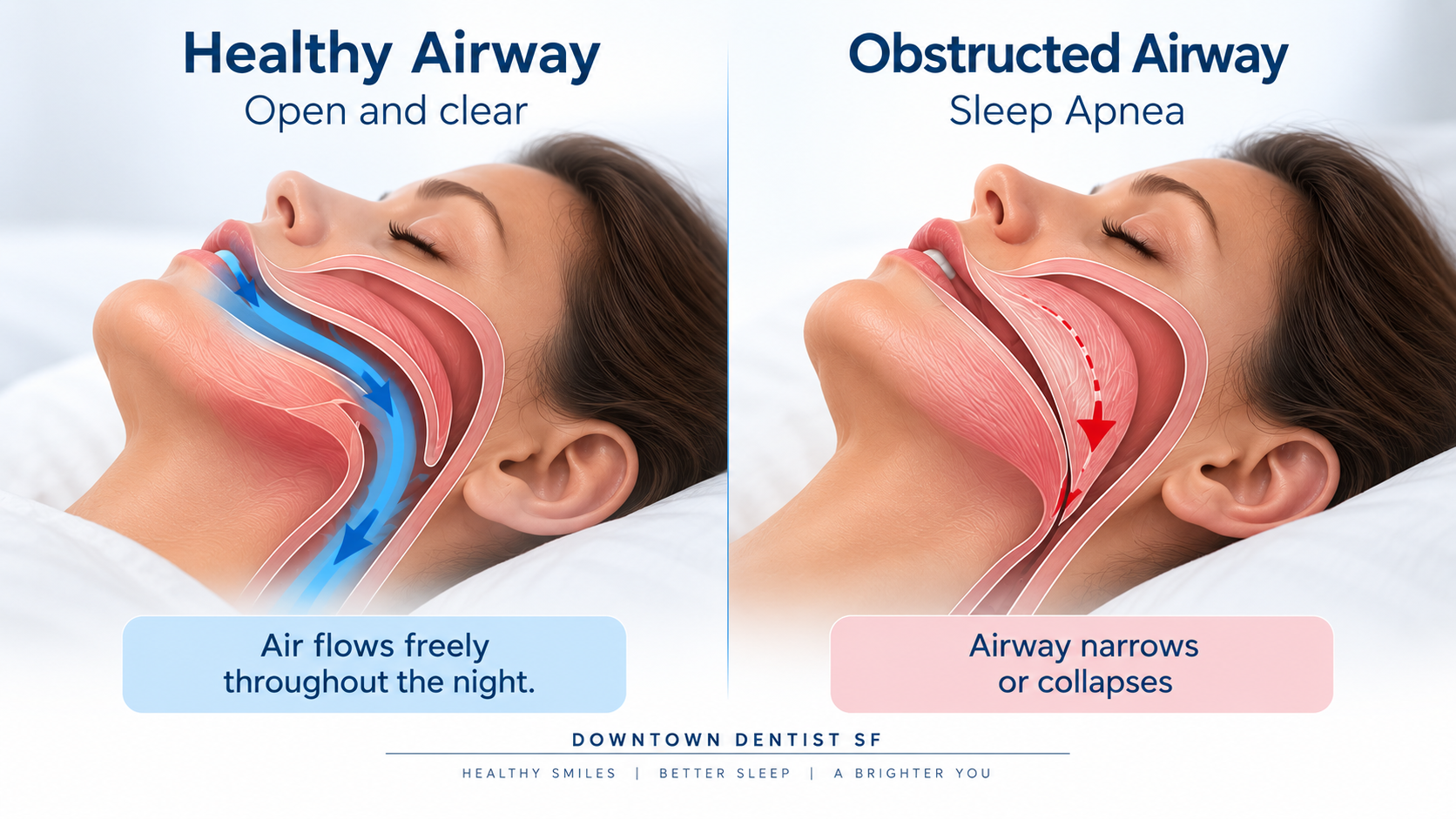
Both treatments are designed to help keep your airway open while you sleep, but they accomplish this in very different ways. For patients with mild to moderate obstructive sleep apnea, a professionally made oral appliance may be an option—particularly for patients who cannot tolerate CPAP or who prefer an alternative treatment.
At Downtown Dentist SF in San Francisco, Dr Stefka Petrova DDS help appropriate patients explore custom dental sleep apnea appliances in collaboration with their medical or sleep provider.
What Is Obstructive Sleep Apnea?
Obstructive sleep apnea occurs when the upper airway repeatedly narrows or closes during sleep. These interruptions can reduce airflow and oxygen levels and repeatedly disturb normal sleep.
Common signs and symptoms can include:
Loud or persistent snoring
Gasping or choking during sleep
Witnessed pauses in breathing
Daytime sleepiness or fatigue
Morning headaches
Difficulty concentrating
Waking with a dry mouth
Poor-quality or fragmented sleep
Sleep apnea should not be diagnosed based on snoring alone. A proper medical evaluation and sleep testing are important to determine whether obstructive sleep apnea is present and how severe it is.
What Is PAP or CPAP Therapy?
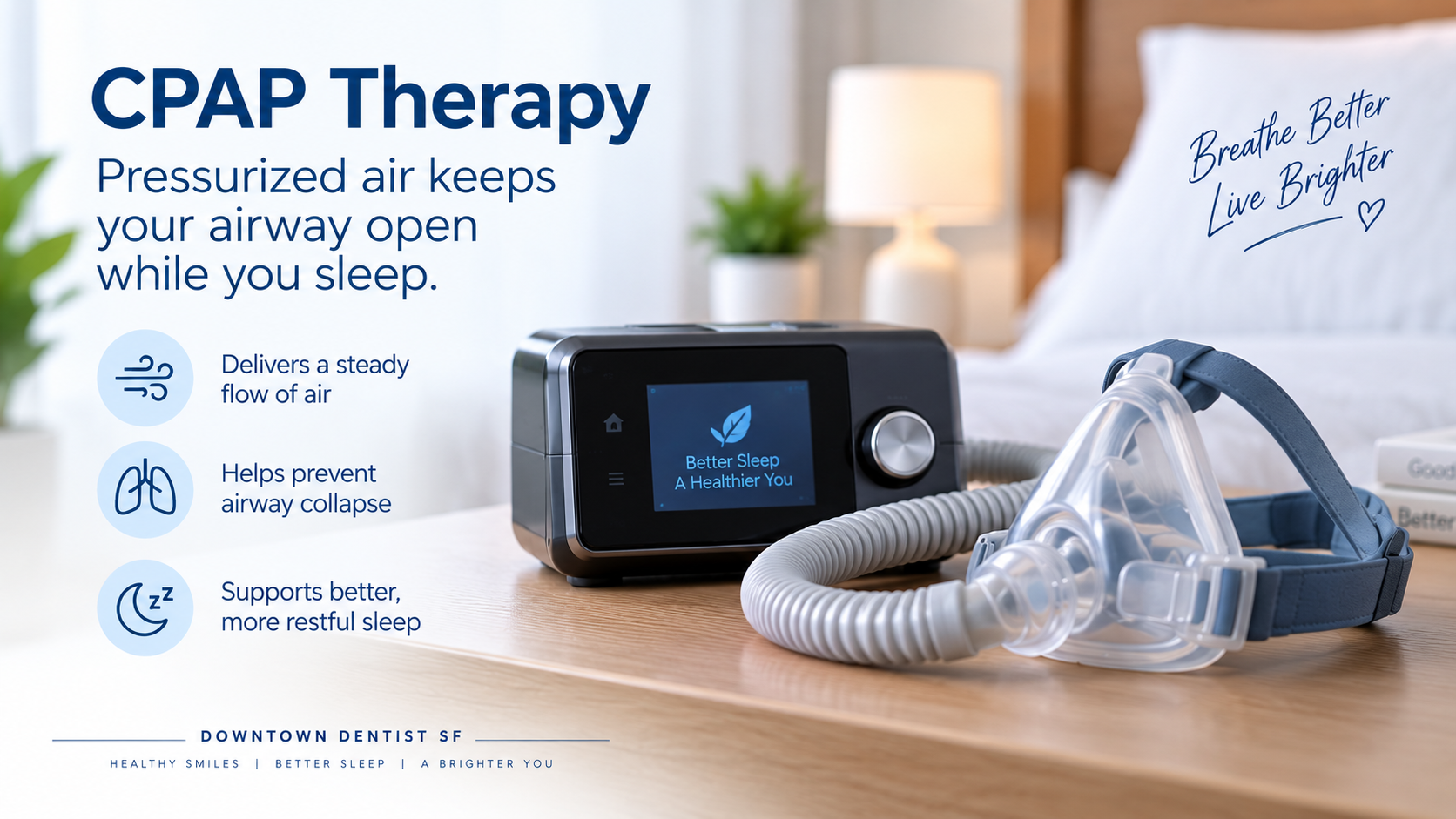
PAP stands for Positive Airway Pressure. CPAP, or Continuous Positive Airway Pressure, is one of the most commonly used forms of PAP therapy for obstructive sleep apnea.
A PAP machine delivers pressurized air through a mask worn over the nose, mouth, or both. The positive pressure helps prevent the upper airway from collapsing while the patient sleeps.
Depending on the patient's needs, a physician may prescribe CPAP or APAP (Auto-Adjusting Positive Airway Pressure).
PAP therapy is highly effective at reducing obstructive respiratory events when it is used consistently and correctly.
Advantages of PAP Therapy
PAP therapy can:
Treat obstructive sleep apnea across a range of severity levels
Provide highly effective control of airway obstruction
Allow treatment data and usage to be monitored
Be adjusted according to the patient's medical and sleep needs
For many patients, PAP remains an important and highly effective treatment.
Why Do Some Patients Look for an Alternative to CPAP?
Although PAP works very well, some patients have difficulty using it consistently.
Depending on the individual, challenges may include:
Discomfort wearing a mask
Air leakage
Dry mouth or nasal dryness
Difficulty sleeping with tubing or equipment
Feeling confined by the mask
Noise or inconvenience
Difficulty traveling with equipment
Simply being unable to sleep comfortably while wearing it
For appropriate patients, this is where oral appliance therapy for sleep apnea may be considered.
What Is a Mandibular Advancement Device for Sleep Apnea?
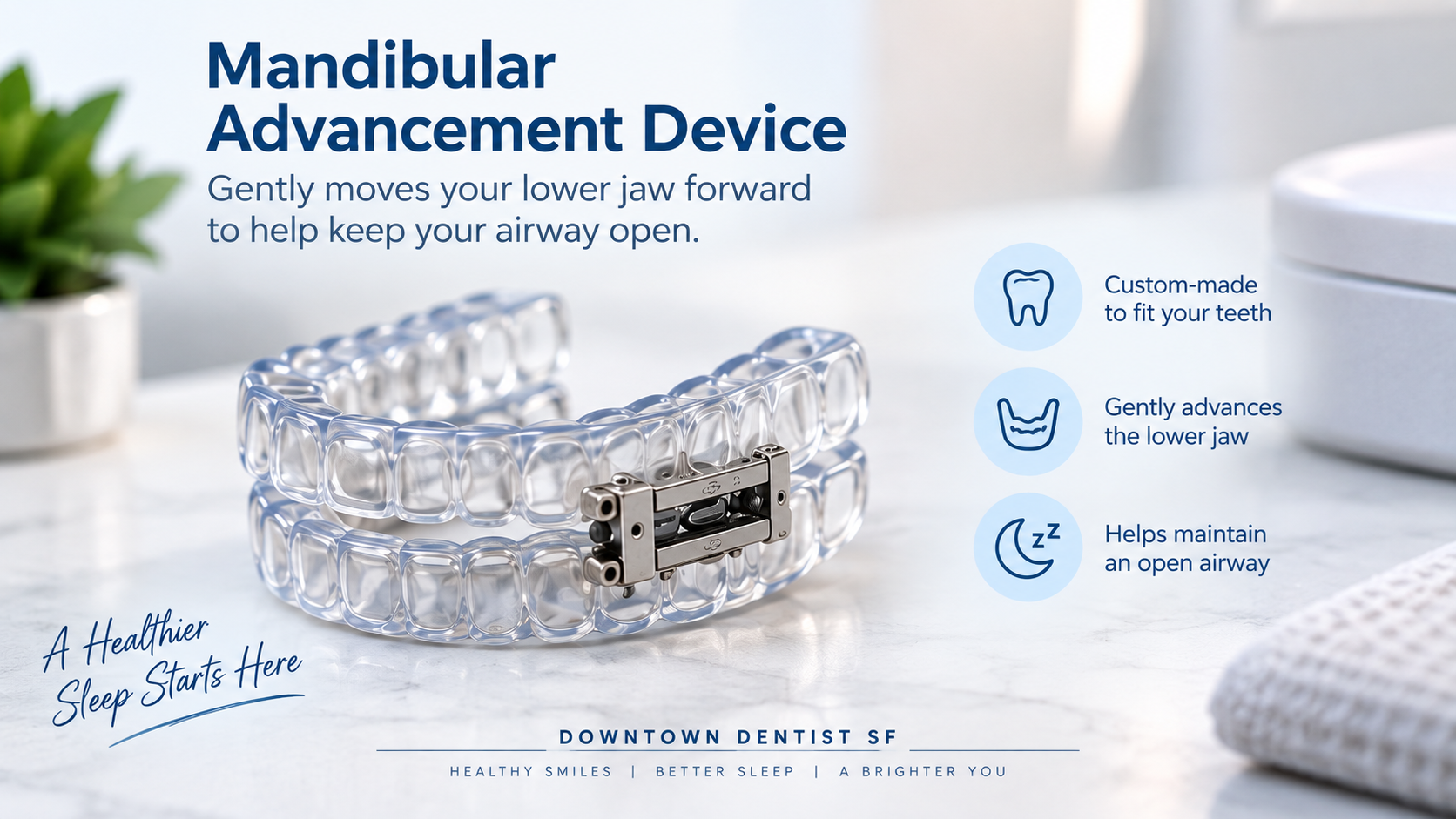
A mandibular advancement device (MAD) is a custom oral appliance worn during sleep.
It may look somewhat like a dental retainer or mouthguard, but its purpose and design are very different.
Rather than using air pressure, a mandibular advancement device works by gently positioning the lower jaw forward. This helps stabilize the jaw and surrounding tissues and creates more space in the upper airway, reducing its tendency to become obstructed during sleep.
Professional sleep apnea appliances are custom-made to fit the patient's teeth and mouth and should not be confused with generic over-the-counter "boil-and-bite" snoring guards.
Who May Be a Candidate for a Dental Sleep Apnea Device?
Custom oral appliance therapy may be considered for adults with obstructive sleep apnea, particularly patients who:
Have mild to moderate obstructive sleep apnea
Cannot tolerate CPAP/PAP therapy
Prefer an alternative to PAP after discussing treatment options with their healthcare provider
Have sufficient healthy teeth and periodontal support for an appliance
Are able to comfortably advance the lower jaw
Are willing to return for adjustment and follow-up
A dental sleep apnea appliance is not automatically appropriate for every patient who snores.
The severity and type of sleep apnea matter, as do the patient's dental health, jaw joints, bite, medical history and other individual factors.
CPAP vs. Mandibular Advancement Device: How Are They Different?
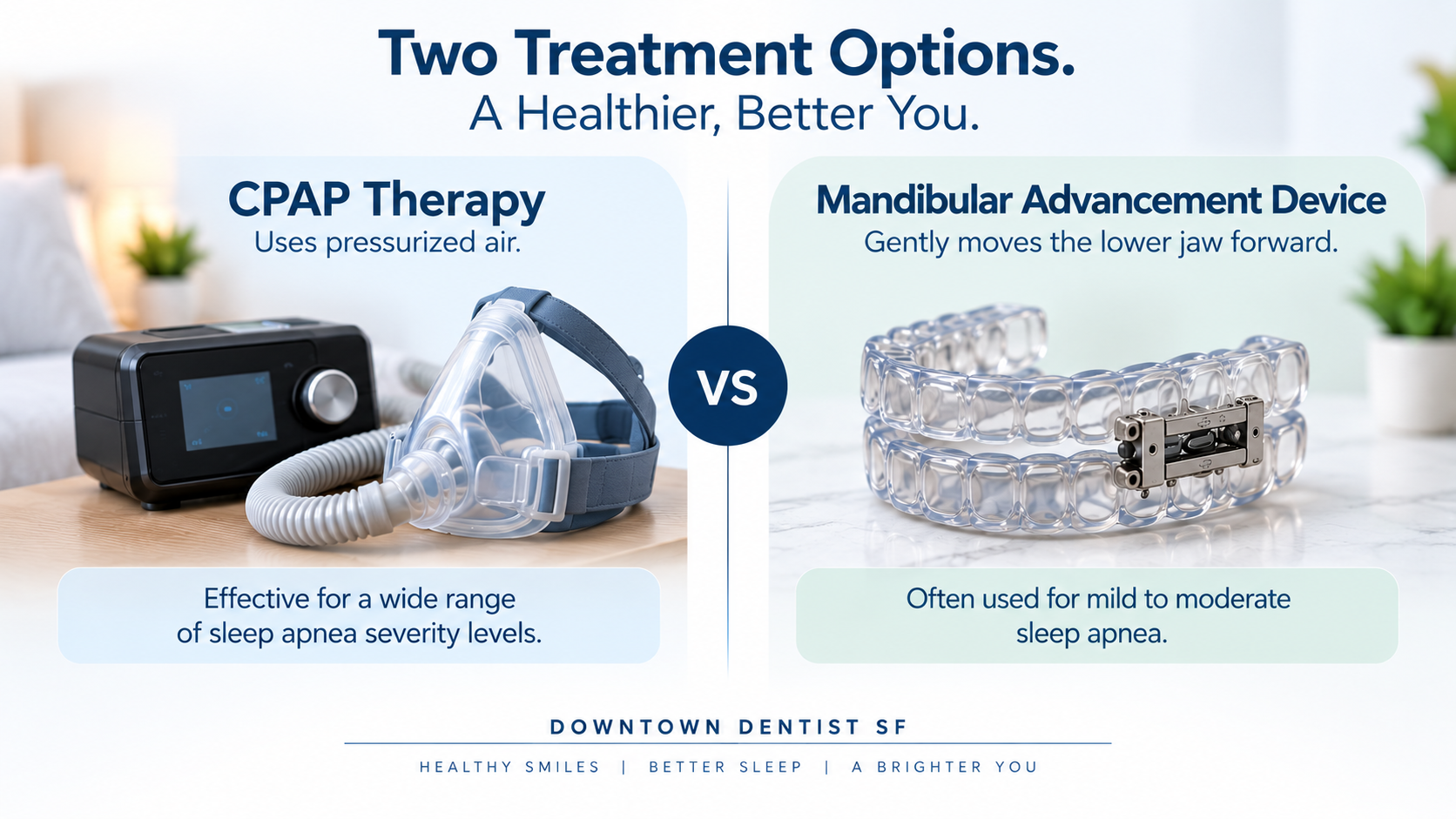
CPAP therapy uses pressurized air delivered through a mask to keep the airway open during sleep and can be used across a range of sleep apnea severity levels. A mandibular advancement device (MAD) is a small, custom dental appliance that gently moves the lower jaw forward to support an open airway. It requires no electricity, is easy to travel with, and is often considered for mild to moderate sleep apnea or for patients who cannot tolerate CPAP.
Is a Dental Sleep Apnea Device Better Than CPAP?
It isn't simply a matter of one treatment being "better."
PAP is generally more effective at reducing the number of breathing disturbances and improving oxygen-related measures during sleep. However, treatment also needs to be something the patient can use consistently.
For some patients with mild to moderate OSA, a custom mandibular advancement device provides a comfortable and convenient alternative. Oral appliance therapy is also recognized as an option for adults with OSA who cannot tolerate CPAP or who prefer an alternative therapy.
The appropriate choice depends on factors such as:
Severity of sleep apnea
Oxygen levels during sleep
Other medical conditions
Dental and periodontal health
Jaw-joint health
Patient comfort
Ability to tolerate PAP
Treatment preferences
This decision should be made together with the patient's medical/sleep provider and a dentist such as Dr Stefka Petrova DDS trained in oral appliance therapy.
Why Choose a Professionally Made Dental Sleep Apnea Appliance?
A professional mandibular advancement device is custom fabricated for the individual patient.
The process typically begins with an evaluation of the teeth, gums, bite and jaw. Digital scans or impressions are then used to fabricate the appliance.
Importantly, many professional devices are titratable. This means the position of the lower jaw can be gradually adjusted rather than simply locking the jaw into one predetermined position.
Professional follow-up is also important because oral appliances can sometimes cause:
Temporary tooth tenderness
Jaw or muscle soreness
Changes in saliva
Morning bite changes
Long-term tooth movement or bite changes
Regular dental monitoring allows these issues to be identified and managed.
Can I Just Buy a Sleep Apnea Mouthguard Online?
A generic mouthguard is not the same as a professionally fabricated sleep apnea appliance.
Clinical guidelines favor custom, titratable oral appliances provided by a qualified dentist over non-custom oral devices when oral appliance therapy is prescribed for obstructive sleep apnea.
More importantly, you should not attempt to treat suspected sleep apnea yourself simply because you snore.
Snoring can be a symptom of obstructive sleep apnea. Proper diagnosis and assessment of severity are important before deciding on treatment.
How Does the Dental Sleep Apnea Appliance Process Work?
For an appropriate patient, treatment generally involves:
1. Diagnosis and sleep evaluation
Obstructive sleep apnea should first be appropriately diagnosed through a medical/sleep evaluation and sleep testing.
2. Dental evaluation
The dentist evaluates the teeth, gums, existing dental work, bite, jaw movement and TMJ to determine whether an oral appliance is appropriate.
3. Digital impressions
Digital scans are taken to create a custom appliance designed specifically for the patient's mouth.
4. Appliance delivery
Once fabricated, the device is tried in and evaluated for fit and comfort.
5. Gradual adjustment
The mandibular position may be advanced gradually to balance airway improvement with comfort.
6. Follow-up
The dentist monitors the teeth, bite, jaw joints and appliance.
Follow-up sleep testing may be recommended by the treating sleep provider to objectively determine whether the appliance is adequately controlling the patient's obstructive sleep apnea.
Do Dental Sleep Apnea Appliances Actually Work?
For appropriately selected patients, custom, titratable oral appliances can improve obstructive sleep apnea.
Research reviewed by the American Academy of Sleep Medicine and American Academy of Dental Sleep Medicine has found that custom oral appliances can reduce measures such as the apnea-hypopnea index and oxygen desaturation index.
However, successful treatment should not be judged only by whether the patient feels better or snores less. Objective follow-up is important to determine whether breathing disturbances during sleep have actually improved.
Sleep Apnea Treatment Requires Medical and Dental Collaboration
One of the most important things patients should understand is that sleep apnea treatment is not simply a choice between a doctor and a dentist.
The two professions have different and complementary roles.
A medical or sleep provider evaluates and diagnoses obstructive sleep apnea and helps determine the appropriate treatment strategy.
When oral appliance therapy is appropriate, a qualified dentist evaluates the patient's oral health, fabricates and adjusts the mandibular advancement device, and monitors the teeth, bite and jaw for potential side effects.
Good communication between the patient's medical and dental providers helps create safer, more effective long-term care.
Looking for a Dental Sleep Apnea Device in San Francisco?
If you have been diagnosed with mild to moderate obstructive sleep apnea and are looking for an alternative to CPAP, a custom mandibular advancement device may be worth discussing with your sleep provider and dentist.
At Downtown Dentist SF, Dr Stefka Petrova DDS can evaluate your teeth, gums, bite and jaw to determine whether you may be an appropriate candidate for a professionally fabricated sleep apnea oral appliance.
If you already have a recent sleep study or sleep apnea diagnosis, bring a copy of your report to your consultation so we can review it as part of your evaluation.
Dr Stefka Petrova DDS, Downtown Dentist SF
San Francisco, California
Schedule a consultation to learn more about custom sleep apnea appliances, mandibular advancement devices, CPAP alternatives and dental sleep medicine in San Francisco.
This information is intended for general educational purposes and does not replace diagnosis or treatment recommendations from your physician, sleep specialist or dentist.